Collagen Peptides Guide 2026: Types, Molecular Weight & B2B Sourcing
Collagen Peptides Guide 2026: Types, Molecular Weight & B2B Sourcing
A complete technical and commercial guide to collagen peptide selection, from China's 19-year manufacturer HuaXuan — covering hydrolyzed collagen types, molecular weight optimization, and sourcing strategies.
📋 Table of Contents
- What Is Collagen? Definition & Composition
- Collagen Peptides vs Gelatin: Key Differences
- Collagen Types & Sources: Bovine, Marine, Porcine
- Molecular Weight: The Bioavailability Factor
- Applications by Industry
- Market Data & Trends (2026-2035)
- How to Source Collagen from a China Manufacturer
- Frequently Asked Questions (FAQ)
1. What Is Collagen? Definition & Composition
Collagen is the most abundant structural protein in the human body, accounting for approximately 30% of total body protein. It forms the primary building block of connective tissues including skin, bones, tendons, ligaments, cartilage, and blood vessels. Composed primarily of glycine, proline, and hydroxyproline, collagen provides tensile strength, elasticity, and structural integrity to tissues.
In industrial and nutraceutical contexts, "collagen" typically refers to collagen peptides (also called hydrolyzed collagen or collagen hydrolysate) — the product of controlled enzymatic hydrolysis that breaks down native collagen into smaller, bioavailable peptide fragments.
Key Composition: Collagen peptides contain ~90% protein with a unique amino acid profile: glycine (~33%), proline (~12%), hydroxyproline (~10%), and alanine (~10%). This profile is distinct from other protein sources and is responsible for collagen's tissue-supporting properties. Unlike gelatin, collagen peptides contain no gelling capability and dissolve readily in both hot and cold liquids.
2. Collagen Peptides vs Gelatin: Key Differences
While both collagen peptides and gelatin originate from the same raw materials (animal connective tissue), they differ fundamentally in molecular structure, functional properties, and end-use applications. Understanding this distinction is critical for procurement teams and formulators.

| Property | Collagen Peptides | Gelatin |
|---|---|---|
| Molecular Weight | 2-8 kDa (small peptides) | 50-100 kDa (denatured chains) |
| Structure | Short peptide fragments | Denatured single alpha chains |
| Solubility | Dissolves in hot & cold water | Requires hot water (50-60C) |
| Gel Formation | No — stays liquid | Yes — thermoreversible gel |
| Absorption Time | ~30-60 min to bloodstream | ~2-3 hours (needs digestion) |
| Bioavailability | High — crosses gut intact | Moderate — must be digested |
| Primary Use | Supplements, nutraceuticals, cosmetics | Food gelling, capsules, coatings |
| Key Benefits | Skin, joint, nail, gut health | Texture, film-forming, binding |
💡 Formulation Insight: Collagen peptides are preferred for functional nutrition and beauty applications because their small molecular size allows them to be absorbed intact into the bloodstream. Gelatin, with its larger molecular weight, must first be digested into smaller fragments before absorption can occur — a process that takes significantly longer and results in lower bioavailability.
3. Collagen Types & Sources: Bovine, Marine, Porcine
Commercial collagen peptides are derived from three primary animal sources, each with distinct type profiles, bioavailability characteristics, and market positioning.

Bovine Collagen (Type I & III)
Bovine collagen dominates the global market with approximately 46.23% market share. Sourced from cow hides and bones, it is rich in Type I and Type III collagen — the types most abundant in human skin, bones, and connective tissue. Bovine collagen typically has a molecular weight of 3-6 kDa and offers excellent cost-effectiveness for general wellness applications. HuaXuan manufactures pharmaceutical and food-grade bovine collagen peptides with customizable molecular weights.
Marine Collagen (Type I)
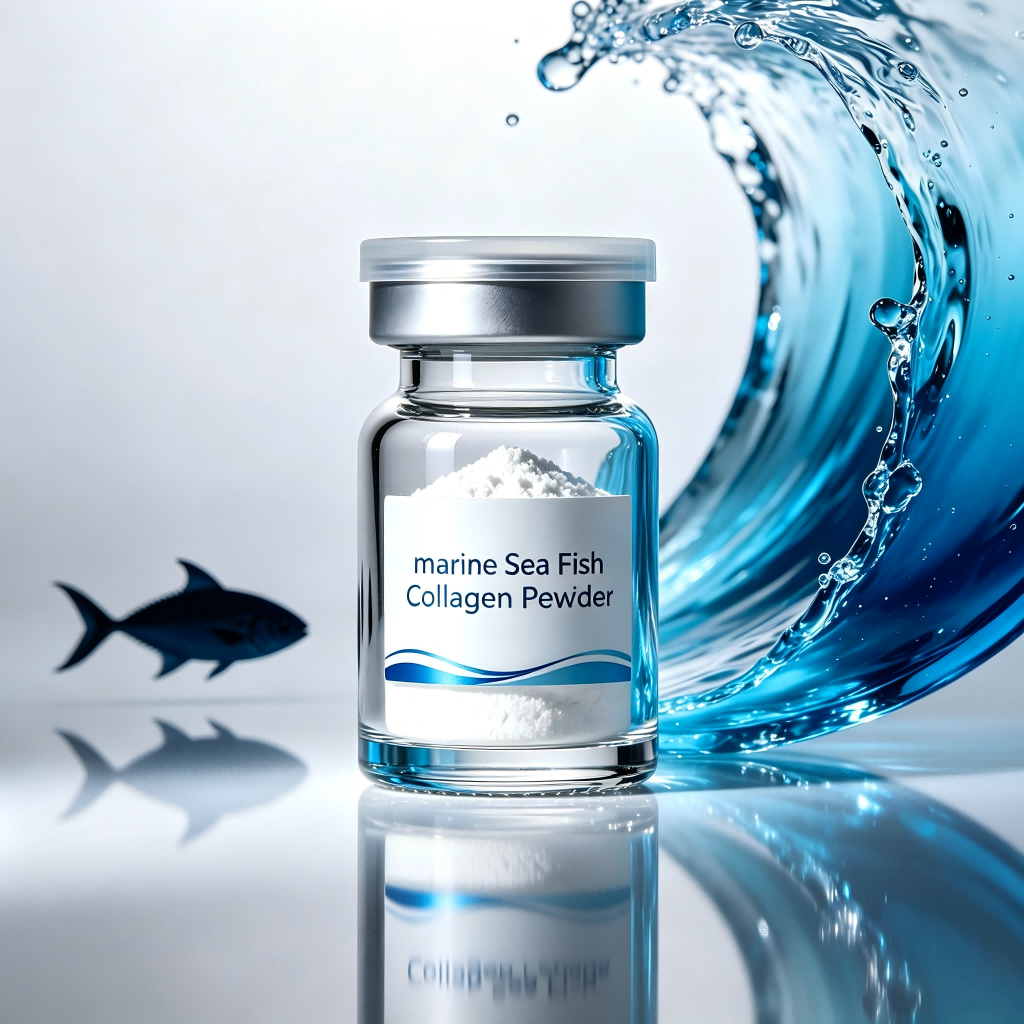
Fish-derived collagen is the fastest-growing source category, expanding at a CAGR of 11.79%. Marine collagen has the smallest particle size (1-3 kDa), the highest bioavailability, and is inherently halal and kosher. It is primarily Type I collagen, making it ideal for skin, hair, and nail applications. The higher cost is offset by superior absorption rates and appeal to pescatarian and religious markets.
Porcine Collagen (Type I & III)
Porcine collagen offers a high-purity alternative with a molecular structure closely resembling human collagen. It is widely used in medical and cosmetic applications where biocompatibility is paramount. HuaXuan produces porcine collagen peptides with consistent batch quality and full traceability.
Type II Collagen (Undenatured)
Derived primarily from chicken sternum cartilage, Type II collagen is structurally distinct from Types I and III. It is used in its undenatured form (not hydrolyzed) for joint health applications, particularly for osteoarthritis and athletic recovery. The undenatured Type II collagen market is growing at 9.64% CAGR, driven by sports nutrition demand.
4. Molecular Weight: The Bioavailability Factor
Molecular weight (MW) is the single most critical specification for collagen peptides. It directly determines absorption speed, bioavailability, and clinical efficacy. The global collagen peptide market is segmented by MW, with 1-3 kDa holding 42.20% market share as the dominant category.

| MW Range | Category | Absorption Speed | Best Applications | Market Trend |
|---|---|---|---|---|
| < 1 kDa | Ultra-small peptides | ~15-30 min | Oral beauty shots, rapid absorption drinks | Fastest growing (10.48% CAGR) |
| 1-3 kDa | Small peptides | ~30-60 min | Skin elasticity, anti-aging, general wellness | Dominant (42.20% share) |
| 3-5 kDa | Medium peptides | ~1-2 hours | Joint health, sports recovery, bone support | Stable growth |
| 5-10 kDa | Large peptides | ~2-3 hours | Bone health, cartilage support, medical | Niche segment |
Why Molecular Weight Matters
Collagen peptides with molecular weight below 3 kDa can cross the intestinal epithelium intact via paracellular transport and peptide transporters (PepT1). Peptides in the 1-3 kDa range demonstrate the highest clinical efficacy for:
- Skin health: Increasing skin hydration by 28% and elasticity by 15-20% over 8-12 weeks
- Joint support: Reducing joint pain scores by 30-40% in osteoarthritis patients
- Nail strength: Reducing brittle nail frequency by 42% over 24 weeks
- Hair quality: Improving hair thickness and reducing breakage
💡 Procurement Tip: When sourcing collagen peptides, always request the molecular weight distribution curve (GPC/HPLC data), not just an average. A product labeled "2 kDa" may contain significant fractions above 5 kDa that reduce bioavailability. HuaXuan provides full MW distribution reports with every batch.
5. Applications by Industry
Dietary Supplements (40.34% Market Share — Fastest Growing)
The dietary supplements segment leads the collagen peptide market, growing at 9.95% CAGR. Products include powders, capsules, tablets, and RTD beverages targeting skin health, joint support, and athletic recovery. The aging global population — projected to reach 2.2 billion people aged 65+ by the 2070s — is a primary demand driver.
Nutraceuticals & Functional Foods
Collagen-fortified foods represent a rapidly expanding category. Applications include protein bars, fortified beverages, dairy products, and baked goods. The "beauty-from-within" trend has driven significant innovation in collagen-infused functional foods, particularly in Asia-Pacific markets.
Cosmetics & Personal Care
Collagen peptides are used in topical skincare formulations for their moisturizing, film-forming, and anti-aging properties. They improve skin barrier function and reduce transepidermal water loss (TEWL). The cosmetic collagen segment is expanding as consumers seek science-backed beauty ingredients.
Pharmaceutical & Medical
Medical-grade collagen is used in wound dressings, tissue scaffolds, hemostatic agents, and drug delivery systems. Collagen's biocompatibility and biodegradability make it ideal for regenerative medicine applications, including 3D bioprinting and tissue engineering.
Sports Nutrition
Collagen peptides are increasingly incorporated into pre-workout and recovery formulations. Clinical studies demonstrate that 10-15g of collagen peptides taken 30-60 minutes before exercise can increase collagen synthesis in tendons and ligaments, reducing injury risk and accelerating recovery.
6. Market Data & Trends (2026-2035)

| Metric | Value |
|---|---|
| Global Market Size (2025) | USD 2.16 Billion |
| Projected Market Size (2035) | USD 6.39 Billion |
| Global CAGR (2026-2035) | 11.46% |
| Market Size (2026) | USD 1.98 Billion |
| Largest Application Segment | Dietary Supplements (40.34%) |
| Fastest-Growing Application | Dietary Supplements (9.95% CAGR) |
| Largest Source Segment | Bovine Collagen (46.23%) |
| Fastest-Growing Source | Marine Collagen (11.79% CAGR) |
| Dominant MW Segment | 1-3 kDa (42.20% share) |
| Largest Regional Market | North America (34.14%) |
| Fastest-Growing Region | Asia-Pacific (10.94% CAGR) |
Critical Industry Trends
- Aging Population: By the 2070s, 2.2 billion people will be aged 65+, driving unprecedented demand for joint and bone health supplements.
- Beauty-from-Within: Consumers increasingly prefer ingestible beauty solutions over topical-only approaches, fueling collagen supplement growth.
- Clean-Label Demand: Non-GMO, grass-fed, wild-caught, and sustainably sourced collagen commands premium pricing and loyalty.
- Multi-Functional Formulations: Collagen + hyaluronic acid + vitamin C combinations show synergistic efficacy and higher consumer appeal.
- Marine Collagen Surge: Halal, kosher, and pescatarian certifications drive marine collagen adoption in Middle Eastern and Asian markets.
- E-Commerce & DTC: Direct-to-consumer collagen brands are reshaping distribution, with subscription models driving recurring revenue.
7. How to Source Collagen from a China Manufacturer
China is the world's largest producer and exporter of collagen peptides, supplying raw materials to brands across North America, Europe, and Asia. When sourcing from a Chinese manufacturer, use this comprehensive qualification checklist:
- Verify Certifications: ISO 9001 (Quality), ISO 22000 / FSSC 22000 (Food Safety), HACCP, GMP (Pharma), Halal / Kosher. Request current copies and verify validity through issuing bodies.
- Request Molecular Weight Data: Demand GPC (Gel Permeation Chromatography) or HPLC molecular weight distribution curves — not just an average. Verify the percentage within your target range (e.g., >80% within 1-3 kDa).
- Confirm Heavy Metal & Microbial Testing: Collagen must meet strict limits for lead, arsenic, mercury, and cadmium. Request CoA with actual test values, not just "pass/fail."
- Audit Raw Material Traceability: Verify the source of raw materials (grass-fed bovine, wild-caught fish, etc.). Request origin documentation and supplier audits.
- Test Batch Consistency: Request samples from 3 different production batches. Test for color, odor, solubility, pH, and MW distribution consistency.
- Evaluate R&D & Customization Capability: A reliable manufacturer should offer custom molecular weight development, flavor masking, and formulation guidance. HuaXuan provides custom collagen peptides from 1-10 kDa with tailored specifications.
- Inspect Packaging Standards: Collagen peptides are hygroscopic. Confirm nitrogen-flushed, double-layer PE liner bags inside sealed drums. Verify shelf-life claims (typically 2-3 years).
Why HuaXuan Collagen? With 19 years of manufacturing experience, Xiamen HuaXuan Gelatin Co., Ltd. produces bovine collagen peptides, marine collagen peptides, and porcine collagen peptides with molecular weights from 1-10 kDa. All products comply with USP/EP standards, with full CoA documentation, halal/kosher certification, and batch traceability. Exported to 40+ countries across Europe, North America, Southeast Asia, and the Middle East.
8. Frequently Asked Questions (FAQ)
Collagen peptides are hydrolyzed collagen with a molecular weight of 2-8 kDa. They dissolve in both hot and cold water, do not form gels, and are absorbed within 30-60 minutes. Gelatin has a molecular weight of 50-100 kDa, requires hot water to dissolve, forms thermoreversible gels, and takes 2-3 hours to digest. Collagen peptides are preferred for supplements; gelatin is preferred for food gelling and capsules.
Collagen peptides in the 1-3 kDa range are optimal for skin and beauty applications. This molecular weight has the highest bioavailability, crosses the intestinal barrier intact, and shows the strongest clinical evidence for improving skin elasticity, hydration, and reducing wrinkles. Studies show 10g daily of 1-3 kDa collagen can increase skin hydration by 28% over 8 weeks.
Marine collagen has smaller particle size (1-3 kDa), higher bioavailability, and is inherently halal and kosher. Bovine collagen dominates the market with 46% share and is more cost-effective for general wellness. The choice depends on your target market, budget, and certification requirements. HuaXuan offers both with full documentation.
The global collagen peptides market was valued at approximately USD 2.16 billion in 2025 and is projected to reach USD 6.39 billion by 2035, growing at a CAGR of 11.46%. The dietary supplements segment holds 40.34% market share and is the fastest-growing application at 9.95% CAGR.
Request a Certificate of Analysis (CoA) showing molecular weight distribution (GPC/HPLC), amino acid profile, heavy metals, microbial limits, and moisture content. Verify certifications (ISO 22000, HACCP, GMP, halal/kosher). Test samples from 3 different batches for consistency. Contact HuaXuan for a sample CoA and specification sheet.
Yes. Unlike gelatin, collagen peptides dissolve in both hot and cold liquids without forming a gel. They are heat-stable up to 100C, making them ideal for coffee, tea, soups, and baked goods. However, prolonged exposure to very high temperatures (>120C) may begin to degrade peptide bonds, so moderate heat is recommended for maximum bioactivity.
Looking for a Reliable Collagen Peptide Manufacturer?
HuaXuan Gelatin supplies pharmaceutical-grade, food-grade, and cosmetic-grade collagen peptides with molecular weights from 1-10 kDa. Request a specification sheet, sample CoA, molecular weight distribution report, or schedule a virtual factory audit today.
Request Quote & Sample →References: Market data synthesized from Spherical Insights, Mordor Intelligence, Grand View Research, and Global Market Insights (2026). Technical data sourced from USP-NF, European Pharmacopoeia, PubMed clinical studies, and Rousselot/Darling Ingredients technical literature. Molecular weight and bioavailability data adapted from peer-reviewed collagen absorption studies.
About the Author: Xiamen HuaXuan Gelatin Co., Ltd. is a 19-year manufacturer of collagen peptides, gelatin, and pharmaceutical capsules based in Xiamen, China. We supply bovine, marine, and porcine collagen with custom molecular weights and full regulatory documentation. Learn more about us →
Collagen Peptides Sourcing Field Guide: Specs, Compliance & Supplier Selection