Compare fish, bovine and Type II chicken collagen ingredients by source, specification, solubility, application and sourcing requirements.
Collagen Ingredient Guide
Fish vs. Bovine vs. Type II Chicken Collagen: How to Choose the Right Ingredient
Collagen ingredients are used in nutritional foods, beverages, dietary supplements, functional formulations and other specialized products. However, “collagen” is not a single standardized ingredient. Its source, molecular profile, protein content, solubility, flavor, processing method and intended application may differ considerably.
For buyers and product developers, the first step is not simply asking for a collagen price. It is identifying which collagen source and specification best match the final product.
1. Fish and Marine Collagen
Fish or marine collagen is generally produced from fish-derived raw materials. It is commonly considered for powdered beverages, nutritional foods, beauty-oriented formulations and other applications where dispersibility and sensory characteristics are important.
When evaluating fish collagen, buyers should confirm:
- The exact raw-material source and species information
- The molecular-weight range stated in the current product TDS
- Protein content and the applicable test method
- Water solubility and solution appearance
- Flavor, odor and color requirements
- Heavy-metal and microbiological limits
- Allergen declaration and destination-market requirements
Marine origin should not be treated as an automatic guarantee of suitability for every formulation. The final decision should be based on the approved SKU-specific technical data and application testing.
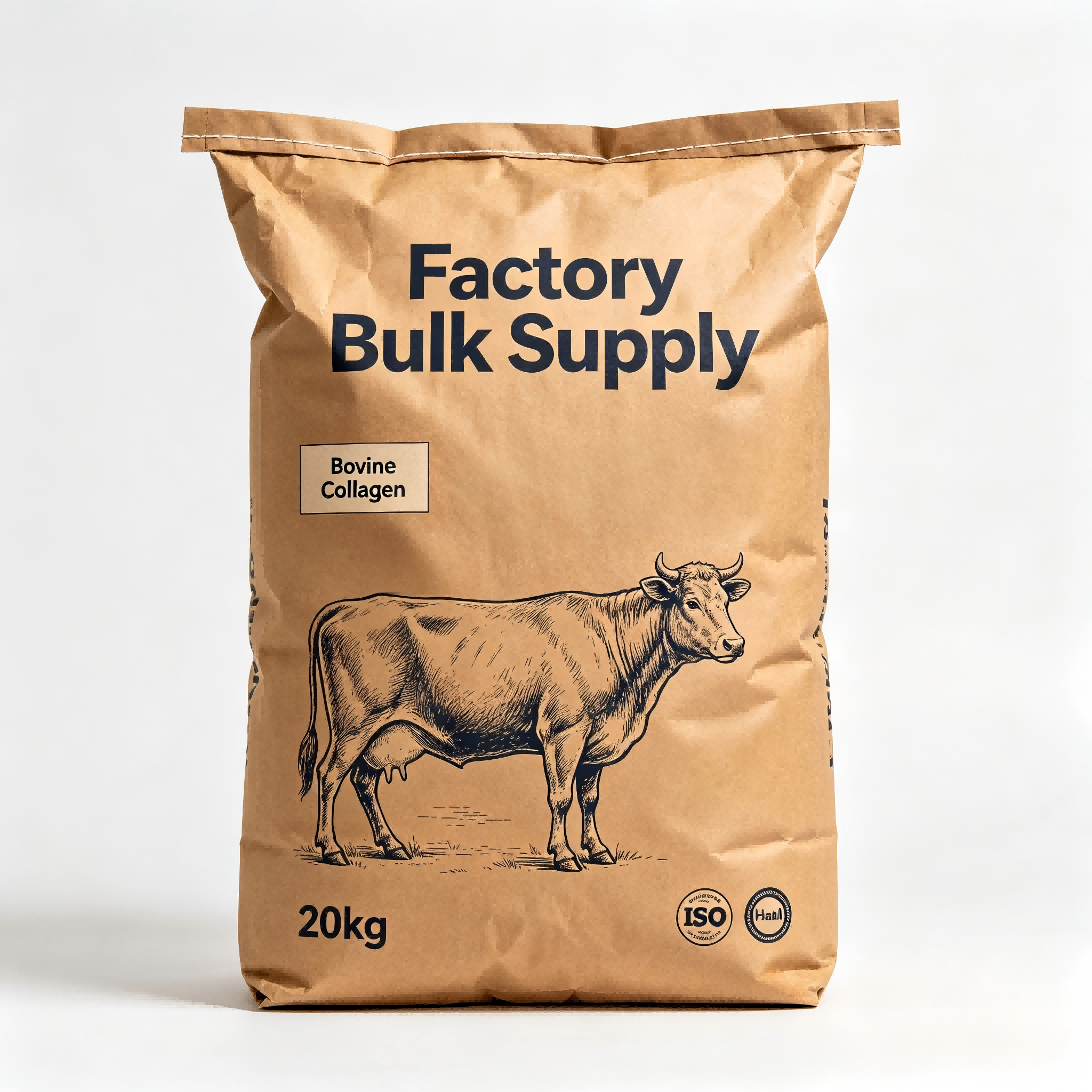
2. Bovine Collagen
Bovine collagen is obtained from cattle-derived materials and is widely considered for nutrition powders, beverages, tablets, capsules and formulated food products. Depending on the manufacturing process, it may be supplied as collagen powder, hydrolyzed collagen or collagen peptides.
Important sourcing questions include:
- Whether the raw material is bovine skin, bone or another defined source
- Whether the ingredient is collagen, hydrolyzed collagen or collagen peptides
- The molecular-weight specification and measurement basis
- Protein, moisture, ash and pH limits
- Bulk density and its effect on filling or blending
- Packaging, storage conditions and shelf life
- Traceability and market-specific documentation
Buyers should avoid assuming that specifications from one bovine collagen grade apply to every grade. Powder, granule and liquid forms may require different quality documents and processing conditions.
3. Type II Chicken Collagen
Type II chicken collagen is typically associated with chicken cartilage-derived ingredients. Its composition and processing route differ from conventional fish or bovine collagen peptides.
Depending on the product, the technical specification may include collagen type, protein content, chondroitin-related parameters, moisture, ash, pH, particle size and microbiological limits. These values must be checked against the current product TDS instead of being generalized across all Type II collagen materials.
Before selecting a Type II chicken collagen ingredient, confirm:
- Whether the product is native or non-denatured, hydrolyzed, or otherwise processed
- The declared collagen type and supporting test method
- The source material and manufacturing process
- The intended dosage form and destination market
- Permitted label wording and regulatory requirements
- Whether any proposed benefit statement requires additional legal review
Product developers should be especially careful with health-related claims. Ingredient specifications do not automatically authorize therapeutic, preventive or disease-related statements.
4. Key Differences at a Glance
| Selection Factor | Fish/Marine Collagen | Bovine Collagen | Type II Chicken Collagen |
|---|---|---|---|
| Typical source | Fish-derived material | Cattle-derived material | Chicken cartilage-derived material |
| Common product positioning | Nutrition and beverage formulations | Broad food and supplement applications | Specialized joint-health formulations |
| Critical specification | Molecular profile, solubility and sensory properties | Source, protein, molecular profile and density | Collagen type, processing state and composition |
| Key compliance question | Species, allergen and destination-market requirements | Traceability and market-specific documentation | Label wording and health-claim restrictions |
5. What Information Should You Send to a Collagen Supplier?
A complete inquiry helps the supplier identify an appropriate grade and reduces repeated communication. Buyers should provide:
- Preferred collagen source
- Final product and intended application
- Required molecular-weight range
- Target protein, moisture, ash and pH specifications
- Flavor, color and solubility requirements
- Required powder form, particle size and bulk density
- Estimated order quantity and packaging preference
- Destination country and required compliance documents
- Sample quantity and evaluation schedule
6. TDS and COA Serve Different Purposes
A Technical Data Sheet describes the approved specification for a particular product grade. A Certificate of Analysis records the test results for a specific production batch. A historical COA should not be treated as a permanent product guarantee, and a general brochure should not replace a current SKU-specific TDS.
Before confirming a purchase, buyers should align the product code, TDS version, batch COA requirements, packaging and destination-market documentation.
Conclusion
Choosing a collagen ingredient requires more than comparing price or protein content. Source, processing method, molecular profile, solubility, sensory performance, application conditions and regulatory requirements all influence the final selection.
Huaxuan supports inquiries for fish/marine collagen, bovine collagen and Type II chicken collagen ingredients. Available grades and specifications should always be confirmed against the current product-specific TDS.
Contact Huaxuan to discuss your collagen application and request the applicable technical documents.
Collagen Powder: The Complete Guide to Types, Benefits & How to Choose the Best Supplier