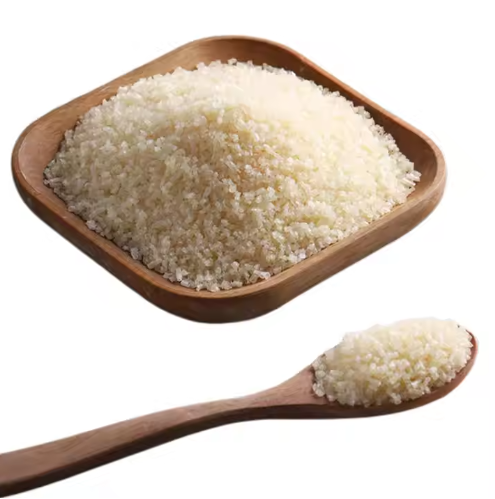
Gelatin in 2026: Market Outlook, Production Process & Application Guide for B2B Buyers
Gelatin in 2026: Market Outlook, Production Process & Application Guide for B2B Buyers
Published: August 19, 2026 | Category: Food & Pharma Ingredients | Reading Time: 10 min
The global gelatin market is entering a new phase of structured growth. Valued at approximately USD 3.6–4.5 billion in 2026, the market is projected to reach USD 6.5–6.8 billion by 2033–2034, expanding at a CAGR of 5.5%–7.8% over the forecast period. cite🛠web_search:17#5:~:text=The global gelatin market size was valued at USD 3.40 billion in 2025 and is projected to grow from USD 3.60 billion in 2026 to USD 6.58 billion by 2034 This growth is driven by surging demand across pharmaceuticals, nutraceuticals, functional foods, and an expanding clean-label movement that positions gelatin as a naturally derived, minimally processed ingredient.
For procurement teams, R&D formulators, and quality managers, understanding the distinctions between Type A and Type B gelatin, source traceability, and application-specific specifications is critical to making informed sourcing decisions.
Table of Contents
What Is Gelatin?
Gelatin is a natural protein hydrocolloid derived from the controlled partial hydrolysis of collagen, the primary structural protein found in animal connective tissues such as skin, bones, tendons, and cartilage. cite🛠web_search:17#6:~:text=Gelatin is obtained by controlled hydrolysis of collagen from various sources It is classified as GRAS (Generally Recognized as Safe) by the U.S. FDA and is not classified as a food additive under EU Regulation (EC) No 1333/2008 — meaning it carries no E-number and appears on ingredient lists simply as "gelatin." cite🛠web_search:17#0:~:text=gelatin is not classified as a food additive...carries no E-number
Unlike intact collagen, gelatin forms thermoreversible gels — it melts when heated and re-gels upon cooling. This unique property, combined with its film-forming, emulsifying, and binding capabilities, makes it indispensable across food, pharmaceutical, cosmetic, and industrial applications.
Key Composition: Gelatin is rich in glycine, proline, and hydroxyproline — amino acids that are scarce in other dietary proteins. Its molecular weight distribution, Bloom strength, and isoelectric point vary significantly depending on the raw material source and extraction method.
Type A vs. Type B Gelatin: Key Differences
Commercial gelatin is categorized into two primary types based on the extraction method:
| Property | Type A Gelatin | Type B Gelatin |
|---|---|---|
| Extraction Method | Acid hydrolysis (HCl or H₂SO₄) | Alkaline / liming process |
| Primary Source | Pig skin (porcine) | Bovine hides & bones |
| Processing Time | 10–48 hours | 30–100 days |
| Isoelectric Point (pI) | 7.0–9.0 (cationic) | 4.7–5.5 (anionic) |
| Bloom Strength | Medium to high | Generally higher |
| Gel Clarity | Higher clarity | Slightly lower clarity |
| Market Share (2026) | ~42% | ~58% |
Type A gelatin is produced through partial acid hydrolysis of collagen, primarily from pig skin. Its higher isoelectric point (pI = 7–9) imparts a cationic (positively charged) nature, making it exceptionally effective for foam production and emulsion stabilization. cite🛠web_search:18#2:~:text=Type A cationic gelatin results from the partial acid hydrolysis of collagen...resulting in the protein isoelectric point shift to higher values (pI = 7–9) It is the preferred choice for confectionery gelling, softgel capsules, and dairy applications.
Type B gelatin is derived from bovine hides and bones through an alkaline (liming) process. Its anionic nature (pI = 4.7–5.5) and generally higher Bloom strength make it ideal for pharmaceutical hard capsules, plasma expanders, and hemostatic sponges. cite🛠web_search:18#0:~:text=Type B gelatin holds 58.0% of the type segment in 2026. Derived from bovine hide and bone through alkaline processing
The Gelatin Production Process
Industrial gelatin manufacturing follows a multi-stage process that transforms collagen-rich raw materials into a refined, functional protein ingredient:
Step 1: Raw Material Pre-treatment
Raw materials — pig skin, bovine hides, or bones — undergo cleaning, size reduction, hair removal, and degreasing. For bone-derived gelatin, dilute acid solutions remove calcium salts. Fat content must be reduced to <1% before extraction. cite🛠web_search:17#4:~:text=If the raw material used in the production of the gelatin is derived from bones, dilute acid solutions are used to remove calcium and other salts...fat content, which should not exceed 1%
Step 2: Hydrolysis
Collagen is converted to gelatin through controlled hydrolysis:
- Acid hydrolysis (Type A): Weak acid treatment for 10–48 hours, suitable for less cross-linked materials like pig skin.
- Alkaline hydrolysis (Type B): Lime treatment for several weeks, breaking complex crosslinks in bovine collagen.
- Enzymatic hydrolysis (emerging): Faster processing with better yield and improved physical properties. cite🛠web_search:17#4:~:text=Advances are occurring to optimize the yield of gelatin using enzymatic hydrolysis of collagen...results in almost complete conversion to the pure product
Step 3: Thermal Extraction
Gelatin is extracted using hot water in a multi-stage process with gradually increasing temperatures (50°C → boiling). This minimizes thermal degradation while maximizing yield.
Step 4: Refining & Drying
The extracted gelatin solution undergoes filtration, clarification, evaporation, sterilization, and drying (spray or drum drying) to produce the final powder, granule, or sheet form.
Raw Material Sources & Certification
Porcine Gelatin (Type A)
Porcine gelatin accounts for approximately 52–57% of the global gelatin market by volume. cite🛠web_search:17#5:~:text=Porcine (Type A) gelatin accounts for approximately 52–57% of the global gelatin market by volume It offers higher Bloom strength, greater gel clarity, lower ash content, and a shorter extraction cycle. Europe's concentrated pork production infrastructure (Poland, Germany, France, Spain) ensures robust, auditable supply chains.
Bovine Gelatin (Type B)
Bovine gelatin dominates pharmaceutical applications and halal/kosher markets. The bovine gelatin market alone was valued at USD 2.66 billion in 2024, growing at a 7.1% CAGR. cite🛠web_search:17#2:~:text=The global bovine gelatin market demand, valued at $2.66 billion in 2024 and growing at a 7.1% CAGR North America leads with ~35% market share, driven by strong cattle farming and pharmaceutical manufacturing.
Marine Gelatin
Fish-derived gelatin is the fastest-growing source category, addressing halal, kosher, and pescatarian market needs. It offers higher bioavailability and is increasingly used in nutraceutical and cosmetic applications. cite🛠web_search:17#4:~:text=Marine gelatin from fish-derived collagen is the fastest-growing source category, targeting halal, kosher, and pescatarian market segments
Certifications to Consider
- Halal / Kosher: Essential for Muslim and Jewish markets; bovine or marine sources required.
- Pharmaceutical Grade (USP/EP): Mandatory for capsule and tablet applications.
- Food Grade: Compliant with FDA 21 CFR and EU food safety standards.
- BSE/TSE Safety: EU Regulation (EC) No 999/2001 documentation for bovine sources.
Key Applications Across Industries
Food & Beverage (Largest Volume, ~60%)
Gelatin serves as a gelling agent, stabilizer, thickener, and emulsifier across confectionery, dairy, desserts, and processed meats. Key products include gummy candies, marshmallows, yogurts, mousses, and aspics. cite🛠web_search:17#5:~:text=The food and beverages application segment is projected to dominate the market with a share of 60.23% in 2026
Pharmaceuticals (Highest Value)
The pharmaceutical gelatin market was valued at USD 1.3–1.7 billion in 2023–2024, growing at 5.5–5.8% CAGR. cite🛠web_search:17#0:~:text=The pharmaceutical gelatin market was valued at approximately $1.3–1.7 billion in 2023–2024 Hard and soft gelatin capsules remain the dominant application, alongside wound dressings (GELFOAM), hemostatic sponges, and blood plasma expanders.
Nutraceuticals & Dietary Supplements
The nutraceutical gummy segment is one of the fastest-growing categories, requiring high-Bloom gelatin for texture stability and clean flavor neutrality. Collagen peptide supplements — derived from further hydrolysis of gelatin — represent a rapidly expanding adjacent market.
Cosmetics & Personal Care
Gelatin's film-forming and moisture-retention properties make it valuable in skincare, haircare, and anti-aging formulations. It is used in face creams, body lotions, shampoos, and sunscreens.
Emerging: 3D Bioprinting & Tissue Engineering
In March 2026, GELITA AG partnered with Black Drop Biodrucker GmbH to advance customized 3D bioprinting solutions using gelatin-based bioinks. cite🛠web_search:17#3:~:text=In March 2026, GELITA AG partnered with Black Drop Biodrucker GmbH for 3D bioprinting R&D Gelatin's biocompatibility and cell-growth support properties make it an ideal substrate for regenerative medicine applications.
Market Data & Trends (2026–2034)
| Metric | Value |
|---|---|
| Global Market Size (2026) | USD 3.6–4.5 Billion |
| Projected Market Size (2033–2034) | USD 6.5–6.8 Billion |
| Global CAGR (2026–2034) | 5.5%–7.8% |
| Largest Regional Market | Europe (~37–41% share) |
| Fastest-Growing Region | Asia-Pacific |
| Type B Market Share | ~58% |
| Porcine Source Share | ~52–57% |
| Food & Beverage Share | ~60% |
| Pharma Market (2023–2024) | USD 1.3–1.7 Billion |
Critical Industry Trends
- Clean-Label Positioning: Gelatin's status as a single-ingredient, non-GMO, naturally derived protein with no E-number makes it highly defensible in clean-label formulations. cite🛠web_search:17#0:~:text=gelatin is non-GMO, minimally processed, and derived from a single source
- Circular Economy: Gelatin production valorizes meat industry by-products (skin, bones) that would otherwise become waste — a strong sustainability narrative under EU CSRD and CSDDD frameworks.
- Plant-Based Competition: While pectin, carrageenan, and HPMC are growing alternatives, they do not yet replicate gelatin's thermoreversible gel structure and Bloom-grade consistency at industrial scale.
- Marine & Poultry Innovation: New sources are being developed to serve halal, kosher, and allergen-sensitive markets with comparable functional performance.
How to Select the Right Gelatin
Use the following framework to match gelatin specifications to your application:
| Application | Recommended Type | Key Specifications |
|---|---|---|
| Hard Capsules (Pharma) | Type B, Bovine, Pharma Grade | Bloom 200–250, Viscosity 3.0–4.5 mPa·s, USP/EP |
| Softgel Capsules | Type A, Porcine, Pharma Grade | High clarity, Quick gelation, Low ash |
| Confectionery Gummies | Type A or B, Food Grade | Bloom 150–250, Neutral flavor, High stability |
| Dairy Stabilization | Type A or B, Food Grade | Medium Bloom, Good emulsification |
| Halal/Kosher Products | Type B, Bovine or Marine | Certified halal/kosher, Full traceability |
| Cosmetic Formulations | Type A or B, Cosmetic Grade | Low odor, Film-forming, Moisture retention |
| 3D Bioprinting (R&D) | Pharma/Research Grade | High purity, Defined MW, Low endotoxin |
Procurement Tip: Always request a Certificate of Analysis (CoA), allergen statement, and origin documentation. For pharmaceutical applications, verify that your supplier operates under GMP and has pharmacopeia-compliant quality systems (USP, EP, JP).
Conclusion
The gelatin market in 2026 is not merely growing — it is differentiating. With the global market approaching USD 7 billion by the mid-2030s, and with pharmaceutical, nutraceutical, and clean-label food applications driving premium demand, procurement and R&D teams must align their sourcing strategies with the dual imperatives of functional performance and regulatory compliance.
Whether you are formulating hard capsules for a generic drug launch, developing the next-generation nutraceutical gummy, or engineering bioinks for regenerative medicine, the choice of gelatin — Type A or Type B, porcine or bovine, food grade or pharma grade — directly impacts product quality, manufacturing efficiency, and market access.
Looking for Pharma-Grade or Food-Grade Gelatin?
Contact our technical team for custom gelatin specifications, sample requests, and full regulatory documentation. We supply pharmaceutical-grade, halal-certified, and application-specific gelatin with global logistics support.
Request a Quote & Sample
Industrial Gelatin Market Insights 2026: Trends, Applications & Sourcing Guide
Related Article