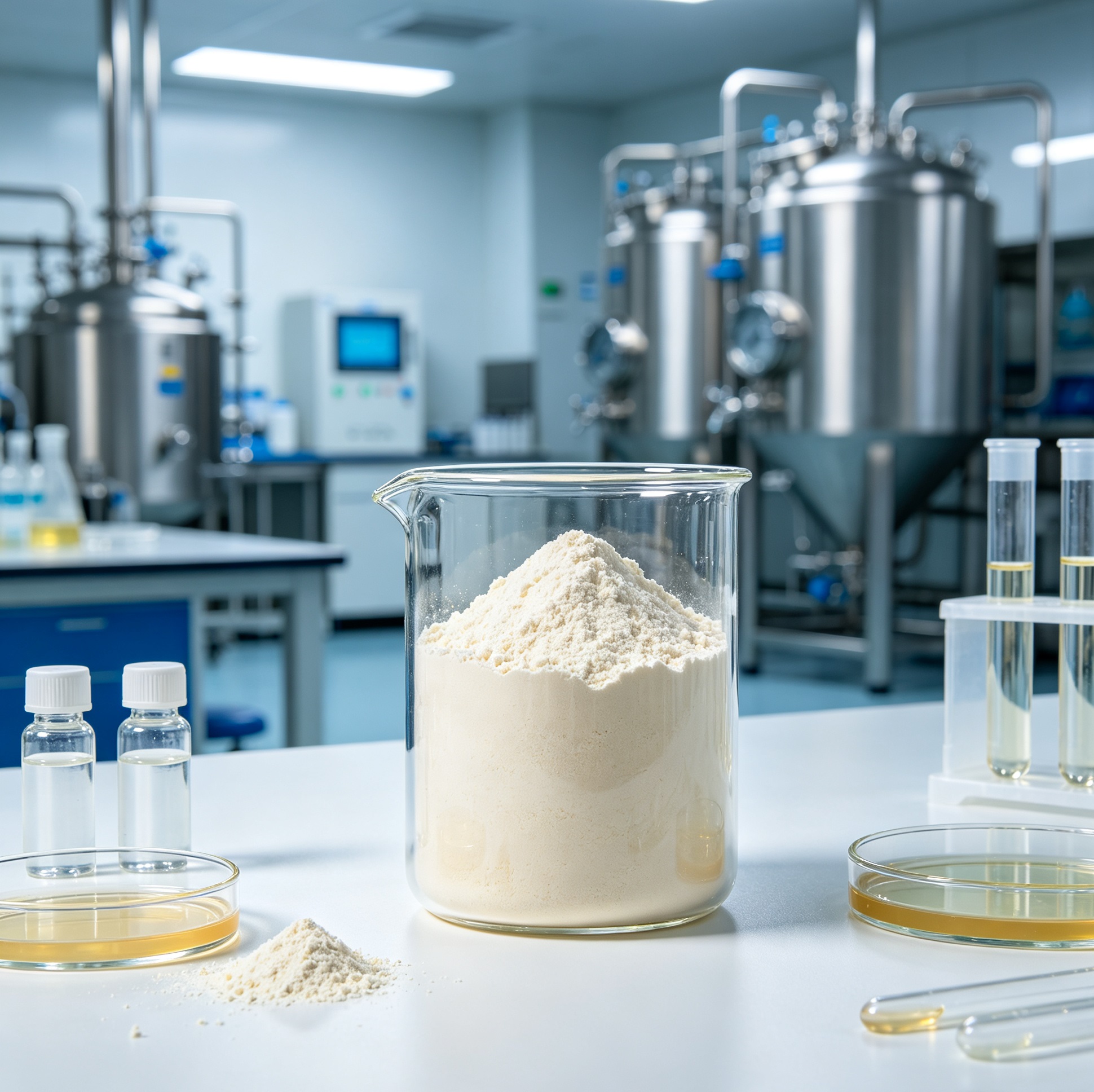
Peptone vs Tryptone vs Soytone: Choose the Right Nitrogen Source
Peptone vs Tryptone vs Soytone: Choose the Right Nitrogen Source
Three common nitrogen sources, three different behaviors in your media. Match the right one to your microbes.

Why the Nitrogen Source Shapes Your Results
Every microbial culture needs organic nitrogen to build protein and grow. The source you pick changes yield, clarity, and even which organisms thrive. Choosing well saves rework and protects batch consistency.
This guide compares the three workhorses—peptone, tryptone, and soytone—so you can match the nitrogen source to your strain and your process. We focus on what buyers actually see on the spec sheet and in the flask.
What Is Peptone
Peptone is a mixed digest of protein from animal tissue, plant material, or yeast. Enzymes or acid break the protein into peptides and free amino acids. It delivers a broad nutrient profile plus vitamins and minerals that speed metabolism.
Because the raw material varies, peptone varies too. Animal peptone suits bacteria and pathogens; plant peptone favors lactic acid bacteria and actinomycetes. Total nitrogen often reaches ≥14.5% for bacteriological grades, with complete water solubility.

What Is Tryptone
Tryptone is a pancreatic digest of casein—milk protein. The process preserves a high level of vitamins and growth factors that many fastidious organisms need. It is especially valued where rapid, reliable detection matters.
Compared with broad peptone, tryptone is more defined and richer in tryptophane and branched-chain amino acids. That makes it a staple in LB, nutrient, and enumeration media where repeatability is critical.
Expect amino nitrogen around ≥3.0% and a clean, low-color solution. Its consistency across lots is why quality labs standardize on it for sensitive work.
What Is Soytone (Soy Peptone)
Soytone is an enzymatic digest of soybean meal. It carries no animal material, which matters for vegetarian, Kosher, Halal, and non-GMO product lines. Its higher carbon-to-nitrogen ratio also adds sugars and minerals.
Plant-based media often perform better for lactic acid bacteria, actinomycetes, and many fermentations. Soytone gives a cost-effective, allergen-conscious nitrogen source without sacrificing growth support.
Total nitrogen typically lands near ≥8.0%, with good solubility and a light color. It is the go-to choice when animal-free claims are part of your specification.
Peptone vs Tryptone vs Soytone at a Glance
Use this table to screen the three sources against the traits buyers check first.
| Property | Peptone | Tryptone | Soytone |
|---|---|---|---|
| Source | Animal / plant / yeast | Casein (milk) | Soybean |
| Process | Enzyme or acid digest | Pancreatic digest | Enzymatic digest |
| Typical TN | ≥14.5% (bacteriological) | ≥11.5% | ≥8.0% |
| Animal-free? | Depends on source | No | Yes |
| Best fit | General media, fermentation | Fastidious, defined media | Plant-based, cost-sensitive |
How to Choose by Application
Match the source to the organism first, then to your market claims. Molds, actinomycetes, and many lactobacilli prefer plant-derived nitrogen, while E. coli and common pathogens grow strongly on animal sources.
If your product must be animal-free, soytone removes the BSE and allergen concerns that animal peptone or tryptone carry. A food or pharmaceutical claim may also demand Halal, Kosher, or non-GMO documentation on top of the spec.
"Pick the nitrogen source your strain actually prefers—not the one with the lowest price." — Huaxuan culture-media guidance
Four-Step Selection Process
Turn the comparison into a decision. Run these steps before you lock a formula.
List your target strains
Write the organisms you must grow. Fastidious pathogens often need tryptone; plant microbes often prefer soytone.
Check market claims
Confirm whether animal-free, Halal, Kosher, or non-GMO status is required, and rule out sources that cannot certify it.
Compare spec sheets
Review TN, AN, ash, pH, solubility, and microbial limits. Validate that values meet your media formula.
Run a growth test
Prove performance in your own flask with a lot-specific COA before scaling the batch.
Industrial Peptone: What B2B Buyers Should Know BeforeSourcing